
Understanding the Fundamentals of Gambling Odds
Gambling, at its core, is a game of chance governed by probabilities. Understanding these probabilities, often expressed as odds, is crucial for any player seeking to approach the activity with a degree of wisdom rather than pure speculation, and for this reason, many turn to resources such as rollettoplay.org.uk for guidance. Odds represent the likelihood of a particular outcome occurring and, in the context of betting, also dictate the potential payout. For instance, in roulette, the odds of a single number hitting are 37 to 1, meaning for every 37 times it doesn’t hit, it’s expected to hit once. This intrinsic mathematical relationship underpins all forms of gambling.
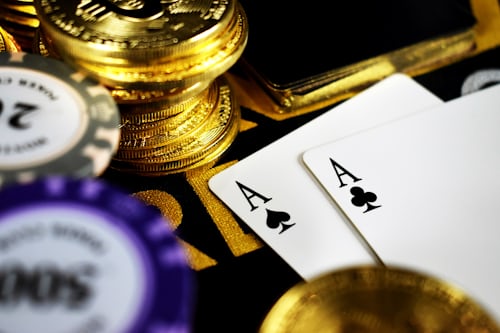
Different gambling games present varying odds. Slot machines, for example, have complex algorithms determining payout rates and the probability of hitting specific winning combinations. Casino table games like blackjack and poker involve a blend of chance and skill, where understanding the odds of drawing certain cards or the probability of opponents holding specific hands can significantly influence decision-making. Recognizing that these odds are not static but are based on mathematical principles is the first step towards a more informed approach to gambling.
Deciphering Different Types of Gambling Probabilities
The world of gambling probabilities is diverse, encompassing fractional odds, decimal odds, and American odds. Fractional odds, commonly used in horse racing, are expressed as a ratio, such as 5/1, indicating that for every £1 bet, you stand to win £5. Decimal odds, prevalent in European betting, are simpler, showing the total return for a £1 stake, including the original stake. For example, odds of 6.0 represent a £6 return on a £1 bet. American odds use plus (+) and minus (-) signs; a minus sign indicates the favorite and the amount you must wager to win £100, while a plus sign indicates the underdog and the amount you win for every £100 wagered.
Beyond just understanding the format, it’s vital to recognize that gambling probabilities are designed to favor the house in the long run. This inherent advantage, known as the «house edge,» ensures the profitability of casinos and bookmakers. While individual players can certainly win in the short term due to the element of chance, consistently beating the odds over extended periods is statistically improbable without a deep understanding of the game’s mathematics and potentially sophisticated strategies, where applicable.
Strategic Approaches to Gambling Probabilities
While luck plays a significant role, employing strategic approaches can help players make more informed decisions and potentially mitigate losses. This involves understanding concepts like variance, which refers to the fluctuation of results around the expected outcome. For example, a player might experience a winning streak despite unfavorable odds, or a losing streak when the odds suggest otherwise. Recognizing and accepting variance is key to maintaining discipline and avoiding chasing losses.
Furthermore, responsible gambling practices are inextricably linked to understanding probabilities. This means setting limits, understanding when to walk away, and never betting more than one can afford to lose. For many, exploring platforms that emphasize responsible play and offer tools for managing betting habits can be beneficial. Websites like Rollettoplay.org.uk often provide resources and insights into how to approach gambling with a clearer understanding of the risks and the underlying mathematical principles, encouraging a more controlled and potentially enjoyable experience.
The Role of Player Psychology in Gambling Probabilities
The psychological aspect of gambling cannot be overstated when considering probabilities. Players often fall prey to cognitive biases such as the gambler’s fallacy, the mistaken belief that if something happens more frequently than normal during a given period, it will happen less frequently in the future, or vice versa. For instance, believing that after a series of red outcomes at the roulette wheel, a black outcome is «due.» Mathematically, each spin is independent, and the odds remain the same regardless of previous results.
Emotional control is another crucial element. Excitement during wins can lead to overconfidence and riskier bets, while frustration during losses can lead to impulsive decisions driven by a desire to recoup funds quickly. Acknowledging these psychological traps and consciously working to mitigate their influence is as important as understanding the numerical odds. Resources that promote a balanced perspective on gambling can help individuals navigate these mental challenges effectively.

Rollettoplay.org.uk: Navigating Gambling with Informed Choices
For those seeking to approach gambling with a greater understanding of the odds and probabilities involved, platforms like Rollettoplay.org.uk aim to provide valuable insights and resources. They serve as a hub for information that can help individuals make more informed decisions about their gambling activities, moving beyond pure chance towards a more strategic and responsible engagement with games of probability.
By offering guidance on the fundamentals of odds, the different types of probabilities encountered in various games, and the importance of understanding player psychology, Rollettoplay.org.uk contributes to a more educated gambling community. Their focus is on empowering players with knowledge, fostering an environment where the excitement of the game can be relished while being mindful of the inherent odds and the principles of responsible play.